
The Best Fall Protection System Depends on Your Building
One of the most common questions we receive is:
“What fall protection system should we install?”
The answer depends on several factors, including how workers access the roof, how often maintenance occurs, the building layout, and the hazards present.
A hospital, university, manufacturing facility, and office tower may all require different solutions.
The goal is not simply OSHA compliance.
The goal is creating a system that protects workers, supports building maintenance, and remains practical for years to come.
Step 1: Identify How Your Roof Is Used
Before selecting a system, determine:
- Who accesses the roof?
- How often do they access it?
- What work is performed?
- Are workers approaching roof edges?
- Is window cleaning performed from the roof?
- Are contractors accessing mechanical equipment?
Buildings with frequent rooftop activity typically require more robust permanent systems than buildings with occasional access.
Step 2: Understand the Four Most Common Fall Protection Systems
Roof Anchor Systems
Roof anchors provide secure attachment points for workers using personal fall protection equipment.
They are commonly used for:
- Window cleaning
- Rope descent systems
- Equipment maintenance
- Fall arrest systems
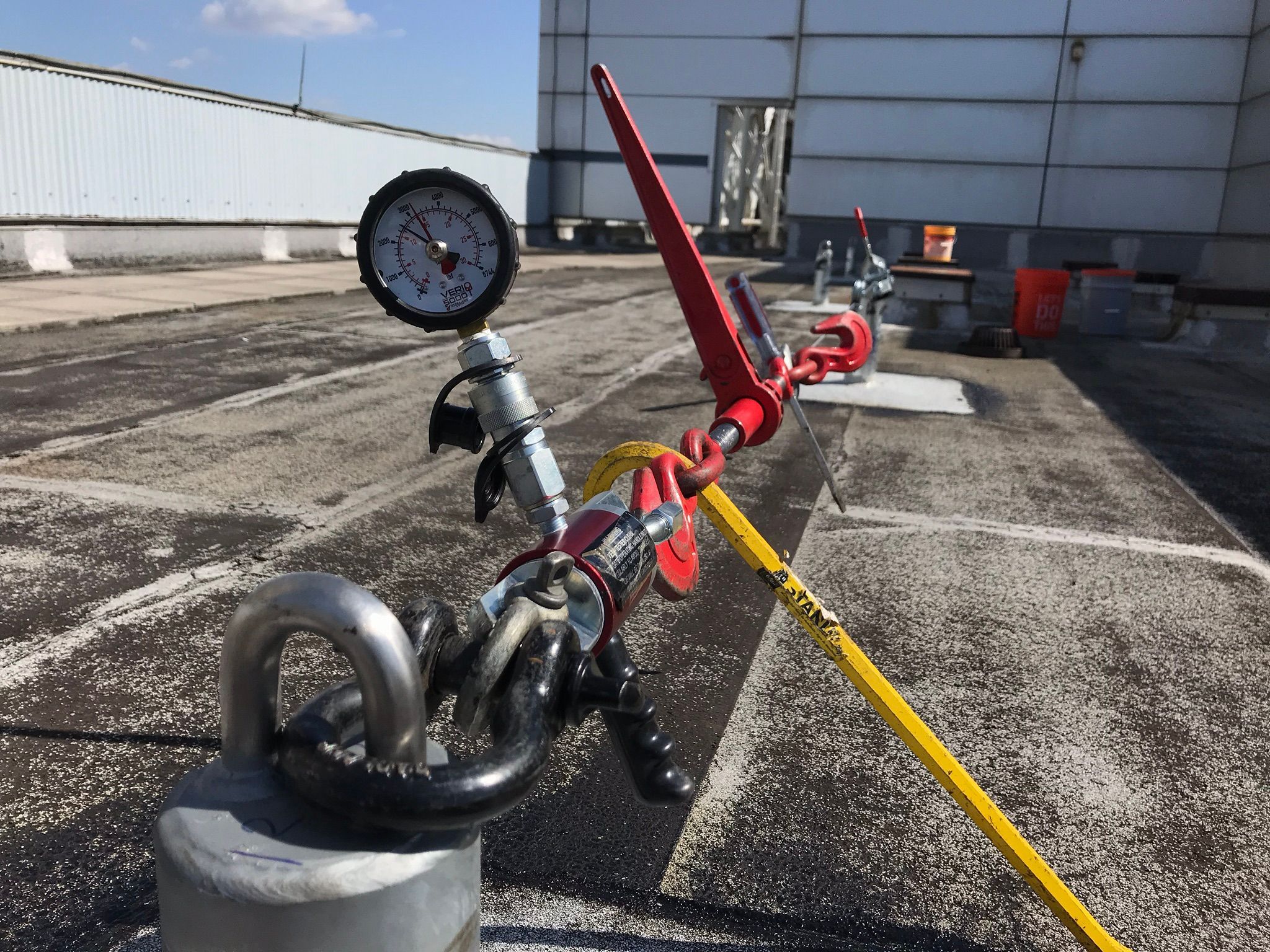
Roof anchors are often the most cost-effective solution when only limited rooftop access is required. OSHA requires anchorages to support 5,000 pounds per attached worker or be engineered as part of a complete system.
Best For:
✔ Office buildings
✔ Schools
✔ Hospitals
✔ Buildings with occasional rooftop access
Horizontal Lifeline Systems (HLL)
Horizontal lifelines allow workers to move across a roof while remaining continuously connected.
Benefits include:
- Greater mobility
- Multiple work zones
- Reduced need for numerous anchor points
- Improved worker productivity
These systems are frequently used on larger commercial roofs where maintenance personnel must travel significant distances.
Best For:
✔ Large commercial roofs
✔ Distribution centers
✔ Manufacturing facilities
✔ Multi-user environments
Guardrail Systems
Guardrails are considered passive fall protection.
Unlike anchors or lifelines, workers do not need to connect to equipment for protection.
Advantages include:
- Continuous protection
- Minimal training requirements
- Reduced PPE dependence
- Protection for multiple users simultaneously
Guardrails are often ideal around roof perimeters, mechanical equipment, and roof hatch openings.
Best For:
✔ Frequent roof access
✔ Maintenance-intensive facilities
✔ Areas with multiple contractors
Davit Systems and Rope Access Systems
Buildings requiring facade maintenance, suspended access, or rope descent systems often utilize davits and specialized anchorage systems.
These engineered systems support:
- Window cleaning
- Facade inspections
- Exterior maintenance
- Building restoration
They are typically installed on high-rise structures where standard access methods are not practical.
Best For:
✔ High-rise buildings
✔ Healthcare towers
✔ Universities
✔ Downtown commercial properties
Step 3: Consider Future Building Needs
One mistake we frequently see is designing a system only for today’s requirements.
Instead, consider:
- Future roof replacements
- Additional HVAC equipment
- Solar installations
- Building expansions
- Increased maintenance activity
The right system should remain effective for the life of the building—not just the next project.
Questions Property Managers Should Ask
Before selecting a fall protection system, ask:
How often is the roof accessed?
Will contractors need rooftop access?
Is window cleaning performed from the roof?
Do multiple workers require access simultaneously?
Are there unprotected leading edges?
What documentation will be required?
What certifications and inspections will be needed?
These answers often determine which system provides the best long-term value.
Fall Protection System Selection Checklist
Roof Usage
☐ Maintenance personnel access roof
☐ Contractors access roof
☐ Window cleaning occurs from rooftop
☐ Multiple users require access
Building Characteristics
☐ Large roof area
☐ High-rise structure
☐ Mechanical equipment near edges
☐ Frequent rooftop activity
Compliance Considerations
☐ OSHA requirements reviewed
☐ Anchor certifications available
☐ Inspection schedule established
☐ Rescue procedures documented
Common Mistakes Building Owners Make
Choosing the Lowest-Cost Option
The least expensive system is not always the most effective.
Ignoring Future Maintenance
Future contractors often need access to areas not considered during initial design.
Forgetting Certification Requirements
Many systems require inspections, certifications, and ongoing documentation.
Installing Too Few Access Points
This frequently creates workarounds that reduce safety and increase liability.
Frequently Asked Questions:
What is the best fall protection system for a commercial building?
There is no universal answer. The best system depends on roof layout, access frequency, maintenance requirements, and building use.
When should a horizontal lifeline be installed?
Horizontal lifelines are often ideal when workers need continuous movement across large roof areas.
Are guardrails better than anchors?
Guardrails provide passive protection and require less training, but they are not practical for every building.
How often should fall protection systems be inspected?
Fall protection systems should be inspected according to OSHA requirements, manufacturer recommendations, and site-specific conditions. OSHA also requires inspection before use and removal from service after impact loading until evaluated.
The Right System Protects More Than Workers
A properly designed fall protection system protects:
- Workers
- Contractors
- Building owners
- Property managers
- Facility teams
More importantly, it helps ensure rooftop work can be performed safely, efficiently, and in compliance with OSHA and ANSI requirements.
At Shine On Anchors, we help building owners and engineers evaluate rooftop hazards, design compliant systems, certify existing equipment, and develop long-term fall protection strategies.
Contact our team to schedule a fall protection assessment for your building.
Contact Shine On Anchors: 📞(773) 227-4522 | 📧anchors@shineongroup.com