Roof Anchor Load Testing

Shine On Anchors provides roof anchor load testing, proof testing and anchor pull testing services for commercial fall protection and suspended-access systems nationwide.

Load testing can help evaluate an installed anchorage when testing is required as part of a system assessment, certification process, engineering evaluation or project specification.

Our team works with building owners, property managers, engineers, contractors and facility teams to evaluate existing roof anchors, perform controlled testing when appropriate and document the results.

Need roof anchors load tested? Contact Shine On Anchors to discuss your building, existing system and testing requirements.

REQUEST ANCHOR LOAD TESTING

What Is Roof Anchor Load Testing?


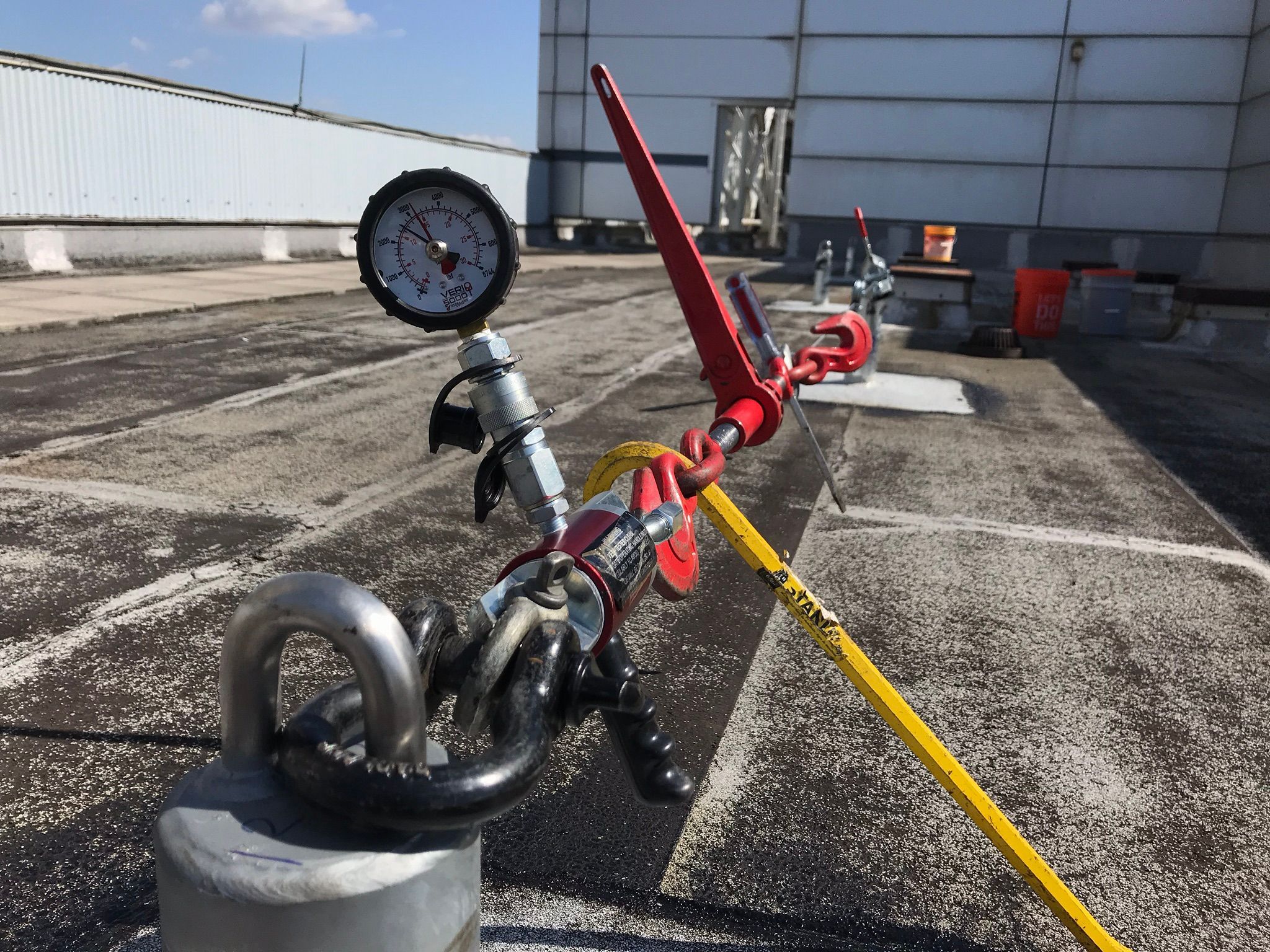
Roof anchor load testing applies a controlled test load to an installed anchorage to evaluate its performance under a specified load.

Depending on the system and testing requirements, this may also be referred to as proof load testing, anchor pull testing or pull testing of anchors.

The appropriate test method and test load depend on factors including the type of anchor, intended use, system design, substrate, manufacturer requirements, engineering criteria and applicable standards.

Load testing should therefore be based on the requirements of the specific system rather than applying the same test procedure or load to every roof anchor.

Proof Load Testing vs. Anchor Pull Testing


The terms proof load test and anchor pull test are sometimes used interchangeably, but the exact test procedure depends on what needs to be evaluated.

Proof Load Testing
A proof load test applies a predetermined test load to an installed anchor to verify its performance against established test criteria.
The test is intended to evaluate the installed anchorage without intentionally testing it to failure.


Anchor Pull Testing
Anchor pull testing uses specialized equipment to apply a controlled force to an anchor.
Depending on the system and test procedure, the applied force and resulting anchor behavior are measured and documented.
The required procedure should be established before testing begins so that the test itself does not unnecessarily damage the anchorage or surrounding structure.

When Is Roof Anchor Load Testing Needed?


Load testing may be appropriate when:

  • An existing roof anchor system lacks sufficient documentation
  • Testing is required by an engineering specification or system design
  • A certification or recertification process requires testing
  • New anchors have been installed and verification is required
  • A building or roof has undergone significant renovation
  • Existing anchors have been affected by construction or building modifications
  • There is concern about an anchor’s installation or condition
  • Previous testing records cannot be located
  • A qualified professional determines that testing is necessary
  • A project specification requires proof testing of installed anchors

Not every roof anchor requires the same testing procedure or frequency. The correct scope should be determined from the specific system, intended use, available documentation and applicable requirements.

Our Roof Anchor Load Testing Process


Shine On’s testing process begins by understanding the existing system and determining the appropriate test requirements.

1. Review the Existing System
We identify the anchor type, intended use and available system documentation.

2. Inspect the Anchor
The anchor and accessible surrounding components are visually evaluated before testing. Obvious damage, corrosion or deterioration may require further evaluation before a load is applied.

3. Determine the Test Requirements
The appropriate test procedure and test load are established based on the system, project requirements and available engineering or manufacturer information.

4. Set Up Testing Equipment
Specialized testing equipment is positioned so that the required load can be applied in a controlled manner.

5. Apply and Monitor the Test Load
The specified test load is applied according to the established procedure while the anchor’s performance is monitored.

6. Document the Results
Testing results are recorded along with relevant observations and any deficiencies identified during the evaluation.
If additional corrective work, engineering review or certification is required, those next steps can then be determined.

What Types of Roof Anchors Can Be Load Tested?


Shine On works with a variety of commercial fall-protection and suspended-access anchorage systems, including:

  • Roof anchors
  • Fall-arrest anchor points
  • Fall-restraint anchors
  • Tie-back anchors
  • Window-cleaning anchors
  • Rope-descent anchorages
  • Suspended-access anchorages
  • Davit-system anchorages
  • Anchorage connectors
  • Engineered rooftop fall-protection systems

Testing requirements can vary significantly between systems. The intended use of the anchor must be understood before an appropriate testing procedure is selected.

Roof Anchor Load Testing for Window Cleaning and Rope Descent Systems


Commercial window cleaning and rope-descent systems rely on building anchorages to support workers and their equipment.

Before these anchors are used, building owners and employers need appropriate information about the anchorage system and its condition.

Depending on the system, its history and available documentation, an evaluation may involve visual inspection, engineering review, load testing or other verification.

Shine On can help determine the appropriate evaluation for existing window-cleaning and rope-descent anchor systems.

Load Testing Is Not the Same as Roof Anchor Certification


Load testing and certification are related, but they are not interchangeable.

A load test evaluates an anchor under a specified test load.

Roof anchor certification is a broader evaluation and documentation process that may include inspection, review of system information, testing and engineering evaluation depending on the anchorage system.

A successful load test by itself should not automatically be treated as certification of an entire fall-protection system.

What Happens If an Anchor Does Not Pass the Test?


An anchor that does not meet the established testing criteria should not simply be returned to service without further evaluation.

Depending on the issue identified, the next step may include:

  • Additional inspection
  • Engineering evaluation
  • Repair
  • Replacement
  • Investigation of the surrounding structure
  • Testing of additional anchors
  • Modification of the fall-protection system

The goal of testing is not simply to produce a pass/fail label. It is to provide useful information about the installed anchorage so the building owner can make an informed decision about the system.

Roof Anchor Testing Documentation


Documentation is an important part of a professional anchor testing program.

Depending on the scope of work, testing records may identify:

  • Anchors evaluated
  • Anchor locations or identification
  • Testing procedure
  • Test criteria
  • Applied test load
  • Test results
  • Visible deficiencies
  • Relevant observations
  • Recommended corrective actions or additional evaluation

Maintaining organized testing and inspection records also makes future system evaluations easier, particularly when properties change ownership or facility-management teams.

Nationwide Anchor Load Testing

Shine On Anchors provides roof anchor and fall-protection services throughout the United States.

We work with individual commercial properties as well as organizations managing multiple buildings or facilities.

Our team can assist with existing systems where documentation is incomplete, anchors require evaluation, or testing is required as part of a larger fall-protection inspection or certification project.

Why Choose Shine On Anchors?

Shine On has more than 20 years of experience working with commercial exterior building access, fall protection, roof anchors and rope-access systems.

That field experience is particularly valuable when evaluating existing systems because we understand not only how anchorages are designed, but how workers actually rely on them for fall protection, rope descent and suspended-access work.

Our team provides inspection, testing, certification, installation and fall-protection services nationwide.

Roof Anchor Load Testing FAQs


What is roof anchor load testing?
Roof anchor load testing applies a controlled test load to an installed anchorage to evaluate its performance against established testing criteria.

What is proof load testing?
Proof load testing applies a predetermined load to an anchor to verify its performance without intentionally loading the anchor to failure.

What is an anchor pull test?
An anchor pull test uses testing equipment to apply a controlled force to an installed anchor. The procedure, direction and magnitude of the test load depend on the anchor system and applicable testing requirements.

Is an anchor pull test destructive?
A properly specified proof or pull test is generally intended to evaluate an anchor without intentionally testing it to failure. The appropriate test procedure should be established before testing.

How much load should be applied during a roof anchor test?
There is no single test load that should automatically be applied to every roof anchor. The appropriate load depends on the system, anchor type, intended use, engineering criteria, manufacturer requirements and applicable standards.

How often should roof anchors be load tested?
Testing frequency depends on the specific system and applicable requirements. Building modifications, roof replacement, damage, missing documentation or engineering requirements can also trigger additional evaluation or testing.

Is load testing the same as roof anchor certification?
No. Load testing may be one component of a certification process, but certification can involve additional inspection, documentation review and engineering evaluation.

Can Shine On test existing anchors installed by another company?
Yes. Existing systems can be evaluated even when Shine On did not perform the original installation. The testing scope will depend on the system and available documentation.

Does Shine On provide anchor load testing nationwide?
Yes. Shine On provides roof anchor and fall-protection inspection, testing and certification services for commercial properties throughout the United States.

Schedule Roof Anchor Load Testing


If your building has existing roof anchors that require proof testing, pull testing or further evaluation, Shine On Anchors can help determine the appropriate testing scope.

We provide roof anchor load testing, inspection, certification and fall-protection services for commercial properties nationwide.

Call: (773) 227-4522

Email: anchors@shineongroup.com
REQUEST ANCHOR LOAD TESTING

Contact Us Today!

Contact us today for the anchor load testing you want, so you can keep your project site safe.


Popular Searches Hide Searches