Roof Anchor Inspection vs. Certification vs. Load Testing
Building owners regularly receive three requests that sound similar:
“We need the anchors inspected.”
“We need the anchors certified.”
“We need the anchors tested.”
Those requests should not automatically be treated as the same thing.
Understanding the difference can prevent unnecessary testing, incomplete evaluations and project delays.
Roof Anchor Inspection
An inspection evaluates the condition of the anchor system.
Depending on the system, an inspection may review:
- Corrosion
- Physical damage
- Deformation
- Missing hardware
- Loose components
- Weld condition
- Labels
- Roof conditions surrounding the anchor
- Changes to the building
- Available documentation
Think of inspection as asking:
What condition is this system in today?
Roof Anchor Certification
Certification addresses a broader question:
Can the system be documented as suitable for its intended use based on the applicable requirements and available evidence?
Certification may involve reviewing:
- Original design information
- Engineering
- Installation documentation
- Inspection findings
- Previous testing
- Manufacturer requirements
- Structural conditions
- Intended application
The exact process depends on the system.
A certification should therefore be more than simply attaching a new tag to an anchor.
Roof Anchor Load Testing
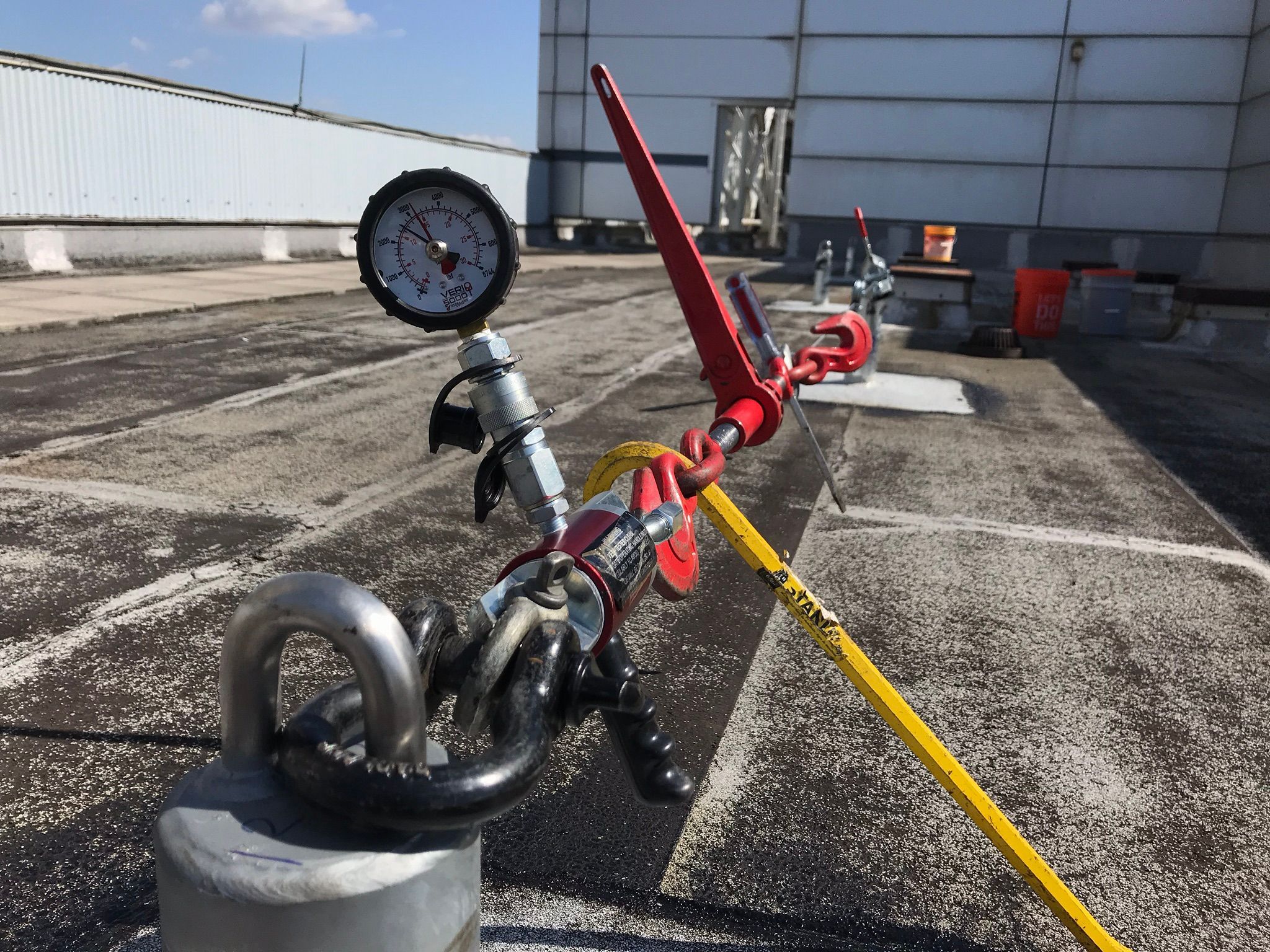
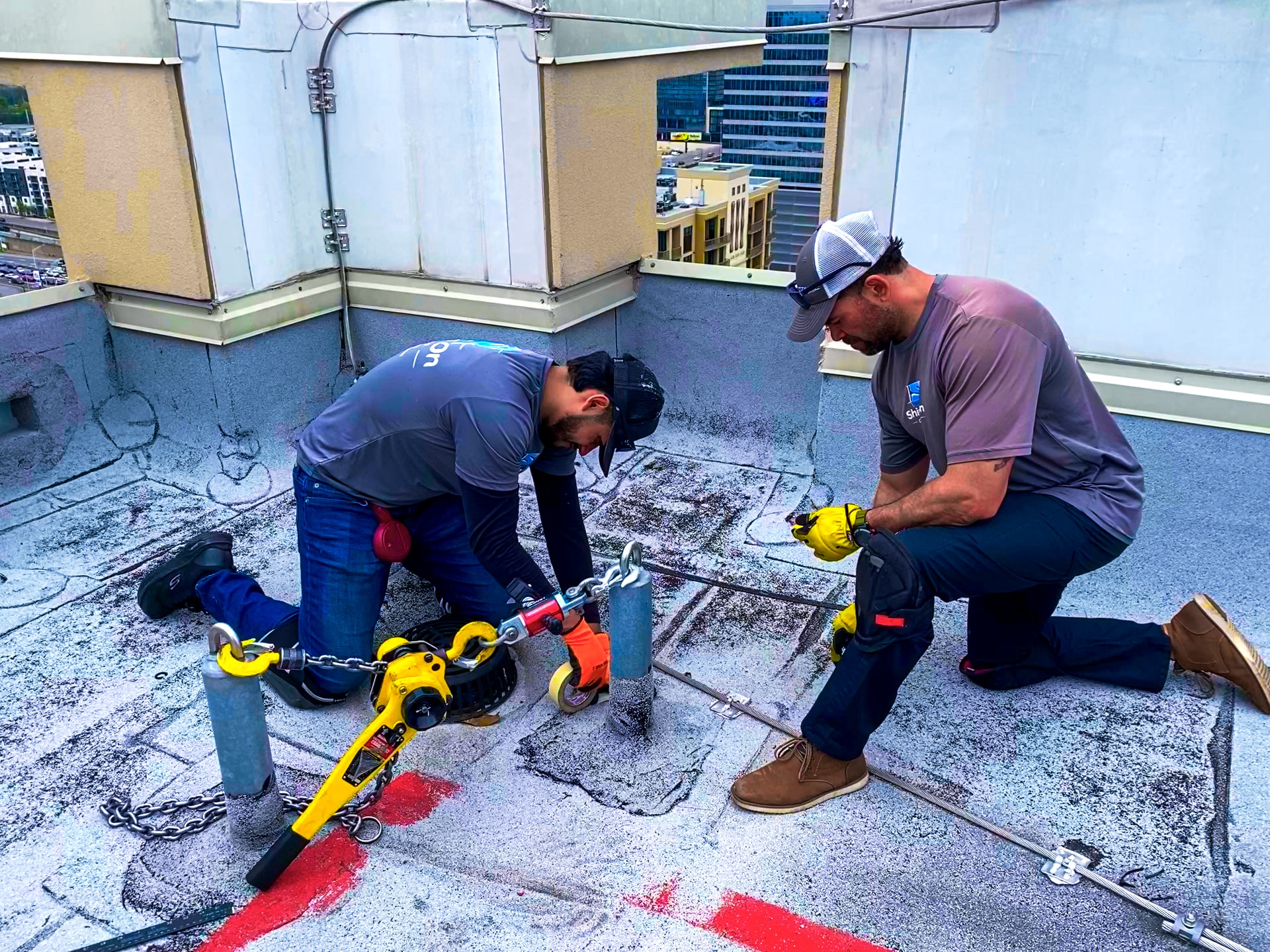
Load testing evaluates an anchor under an applied test load.
Testing may be used when required by the applicable system, engineering specifications, manufacturer requirements or evaluation process.
But this distinction matters:
A load test does not answer every question about an anchor.
An anchor could potentially withstand a test load while other deficiencies remain.
Likewise, not every inspection automatically requires load testing.
Proof Load Testing vs. Pull Testing
This terminology also causes confusion.
A proof-load test applies a predetermined load to evaluate performance under defined conditions.
A destructive pull test is intended to continue loading toward failure or another specified endpoint.
Those are fundamentally different objectives.
Building owners should understand exactly what test is being proposed and why before authorizing work.
Your existing Proof Load vs. Pull Test article should be linked prominently here because Google has already shown strong interest in that content. Earlier 2026 KPI data placed it among your highest-clicked organic pages.
Which One Does My Building Need?
There isn’t a universal answer.
Scenario 1: Known anchors with current documentation
The building may primarily need its scheduled inspection.
Scenario 2: Existing anchors with missing history
Inspection plus documentation review and potentially engineering investigation may be necessary.
Scenario 3: Contractor requests certification
The building should determine exactly what documentation the contractor requires and whether the existing system can satisfy it.
Scenario 4: Roof anchors were modified
The system may require engineering review and additional evaluation.
Scenario 5: New anchors were installed
Commissioning, documentation and any applicable inspection/testing requirements should be completed as part of placing the system into service.
Don’t Order a Test Just Because Someone Said “Test the Anchors”
Facility managers should ask:
- What system is installed?
- What will it be used for?
- What standard or requirement applies?
- What existing documentation is available?
- What information is missing?
- Why is testing being requested?
- What will the test establish?
Those questions help ensure the building purchases the service it actually needs.
Frequently Asked Questions:
Is a roof anchor inspection the same as certification?
No. Inspection focuses primarily on system condition. Certification involves determining and documenting suitability under the applicable evaluation criteria.
Does passing a load test automatically certify an anchor?
Not necessarily. Structural configuration, documentation, condition and intended use can also matter.
Can Shine On Anchors determine which service we need?
Yes. Reviewing the existing system and available documentation can help establish the appropriate scope.
Does every anchor need load testing?
Not necessarily. Testing requirements depend on the system, intended use, applicable requirements, engineering and other circumstances.
How do I know what my contractor is requesting?
Ask whether the contractor needs a current inspection report, certification documentation, test results or another specific record.
Not sure whether your property needs inspection, certification or load testing?
Send Shine On Anchors your existing documentation and system information, and we can help determine the appropriate next step.
Contact Shine On Anchors 📞(773) 227-4522 | 📧anchors@shineongroup.com