Your Building Has Roof Anchors—but No Documentation. Now What?
This situation is remarkably common.
A facility manager walks onto the roof and can physically see the anchors.
But when a contractor asks for the anchor documentation, nobody can find it.
No drawings.
No installation records.
No recent inspection report.
No certification documentation.
Perhaps nobody currently managing the property even knows who installed the system.
The anchors exist.
The paper trail doesn’t.
For a commercial building owner, that creates a problem that should be resolved before contractors rely on those anchors for fall protection or suspended work.
Why Roof Anchor Documentation Gets Lost
Commercial buildings change ownership and management.
Engineering personnel retire. Property-management companies change. Roofing contractors replace old roof assemblies. Files are moved between offices and digital systems.
Over decades, critical records can disappear.
Older buildings are particularly susceptible.
An anchor system may have been installed for exterior maintenance many years ago but today’s facility team may have little information about:
- Who designed it
- Who installed it
- What structure supports it
- What loads it was designed for
- What type of work it was intended to support
- Whether it has been modified
- When it was last inspected
- Whether it has previously been tested or certified
Physical presence alone does not answer those questions.
Step 1: Don’t Guess
One of the biggest mistakes a building owner can make is assuming an anchor is acceptable because:
“We’ve always used it.”
Past use is not documentation.
Neither is appearance.
An anchor may look substantial from above the roof while important information about its structural connection remains unknown.
The first step should therefore be identifying the system and gathering as much existing information as possible.
Step 2: Search the Building Records
Before assuming documentation does not exist, search for:
- Original construction drawings
- Structural drawings
- Reroofing documents
- Fall-protection drawings
- Exterior-maintenance plans
- Previous inspection reports
- Manufacturer information
- Installation invoices
- Engineering reports
- Testing reports
- Certification records
Property managers should also check records held by previous owners, roofing contractors, architects and engineering firms involved with the property.
Sometimes enough information can be reconstructed to significantly simplify the evaluation.
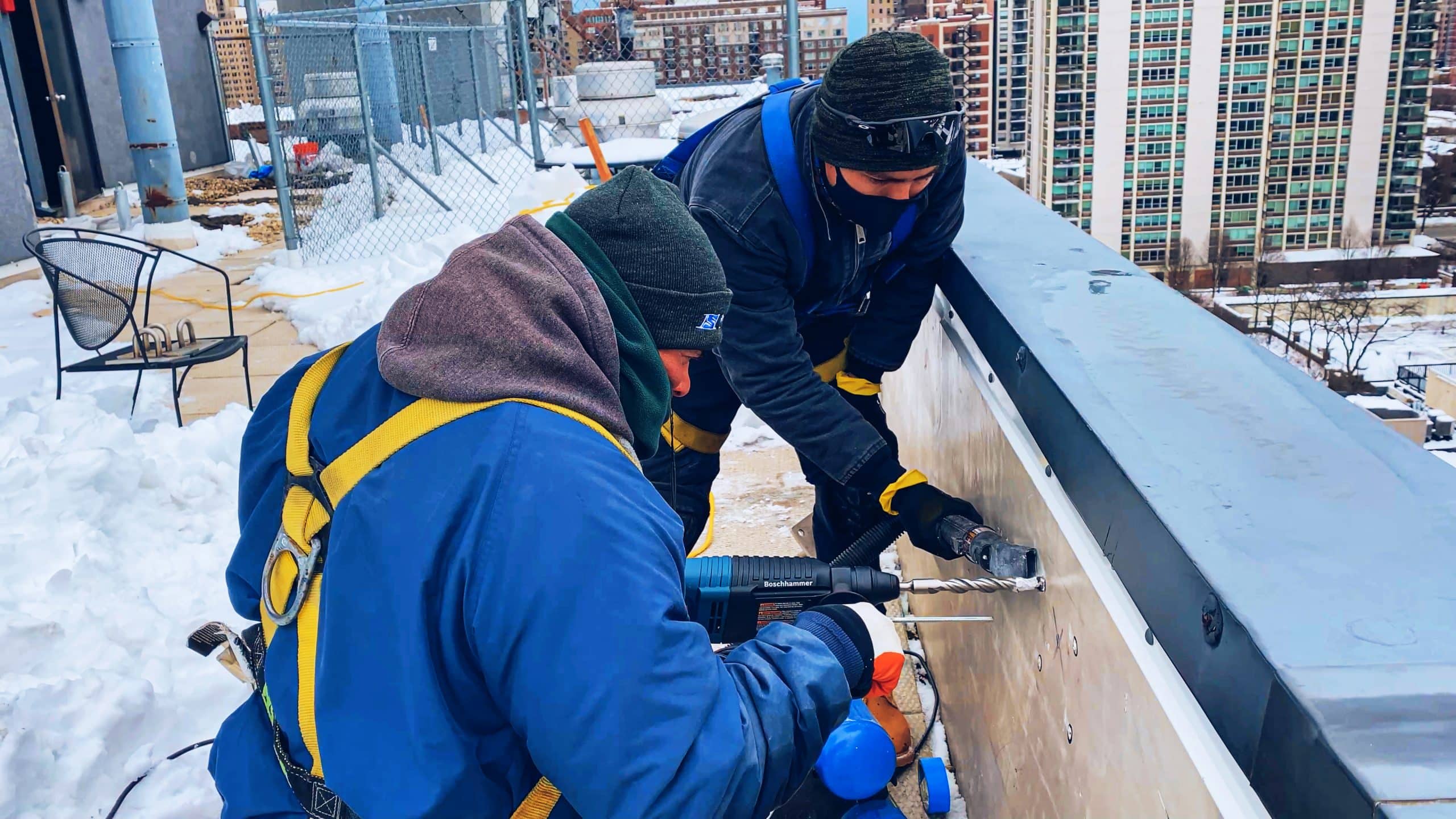
Step 3: Inspect the Existing Anchors
The physical system then needs to be evaluated.
Inspection may identify:
- Manufacturer markings
- Anchor types
- Installation configuration
- Visible attachment details
- Corrosion
- Damage
- Deformation
- Missing components
- Roof-system modifications
- Previous repairs
- Unusual conditions around penetrations
The inspection creates an inventory of what actually exists today.
That’s important because old drawings do not always match current field conditions.
Step 4: Determine Whether Engineering Review Is Needed
When critical information cannot be verified through documentation or inspection, additional investigation may be required.
An engineer may need to evaluate:
- Structural attachment
- Supporting structure
- Anchor configuration
- Material conditions
- Intended loads
- System layout
- Current use
This is especially important when anchors will support rope descent, rope access or personal fall-protection applications.
Step 5: Determine Whether Testing Is Appropriate
Testing is not a substitute for understanding the system.
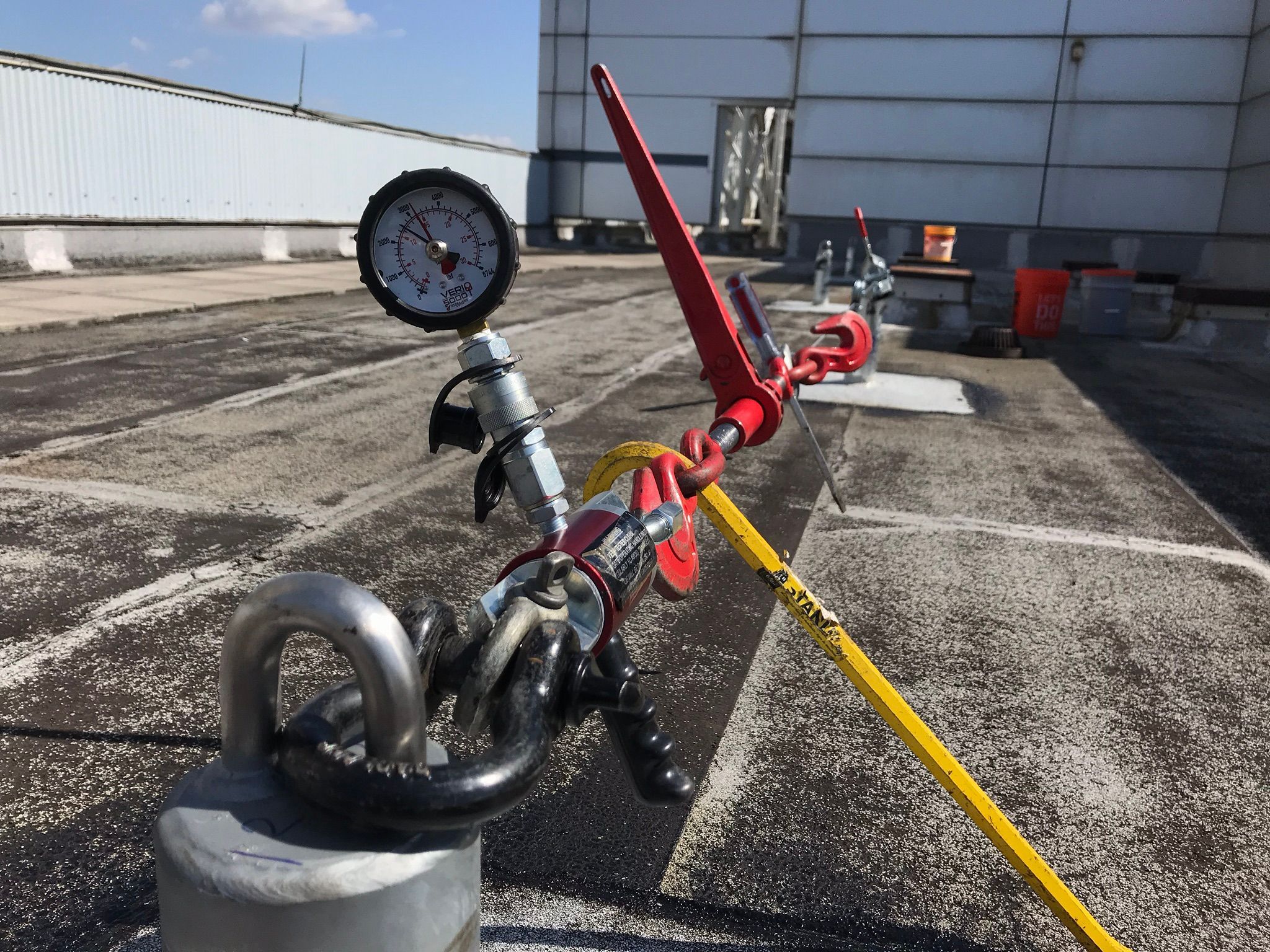
However, testing may be part of an overall evaluation when appropriate for the anchor, structure and intended use.
This is where the distinction between inspection, certification and load testing becomes important.
They are related services, but they are not interchangeable.
A visual inspection tells you something different from engineering review.
A load test tells you something different from an inspection.
Certification depends on the applicable system and evidence available.
The correct process should be based on the actual conditions of the building.
Why Contractors Ask for Documentation
Commercial contractors need to plan how their employees will work safely at height.
That means knowing what fall-protection systems are available and whether those systems are appropriate for the intended work.
Examples include contractors performing:
- Facade inspections
- Window maintenance
- Roof repairs
- HVAC service
- Sign work
- Exterior restoration
- Waterproofing
- Building-envelope inspections
When anchor information cannot be verified, contractors may be unwilling or unable to rely on the system.
That can turn an old documentation problem into an immediate scheduling problem.
Create a Permanent Building Record
Once the anchor system has been evaluated, don’t allow the documentation to disappear again.
Facility records should clearly identify relevant:
- Anchor locations
- System information
- Inspection history
- Certification information
- Testing documentation
- Engineering information
- Repairs or replacements
- Future inspection requirements
The documentation should remain with the building, not solely with one employee or contractor.
That turns an unknown rooftop system into a manageable building asset.
Frequently Asked Questions:
Can roof anchors be used without original installation records?
The absence of records creates uncertainty that should be resolved before the anchors are relied upon. Inspection, investigation and potentially engineering review may be necessary.
Does load testing prove an undocumented anchor is compliant?
Testing can provide useful information but should not be treated as a universal replacement for structural information, inspection and engineering evaluation.
What if a contractor needs to use the anchors immediately?
The appropriate system should be verified before use rather than assuming suitability because work is scheduled.
Can you identify an unknown roof anchor?
Sometimes manufacturer markings, configuration, field conditions and building records can help identify an existing system. Other situations require deeper investigation.
Who should keep roof-anchor records?
Building ownership and facility-management teams should maintain permanent records that can be provided to contractors and future property managers.
Inherited a roof-anchor system with missing records?
Shine On Anchors can help determine what is installed, what documentation is missing and what steps may be needed before the system is placed into service.
Contact Shine On Anchors 📞(773) 227-4522 | 📧anchors@shineongroup.com to schedule a commercial roof-anchor inspection or certification assessment.