Finding old roof anchors on a commercial building creates an immediate question for facility managers:
Can we continue using them?
Existing anchors do not necessarily need to be removed simply because they’re old. At the same time, the presence of an anchor on a roof does not establish that it is suitable for current use.
The answer depends on the anchor, its installation, condition, documentation, intended use and the structure supporting it.
That is why evaluating an existing roof-anchor system should begin with information—not assumptions.
Start With the Existing Anchor System
Before deciding whether anchors should remain in service, a building owner should determine what is actually installed.
That can include identifying:
- Anchor manufacturer and model, when known
- Original installation information
- Structural attachment
- Intended use
- Anchor layout
- Previous inspection records
- Certification or testing documentation
- Roof modifications since installation
- Signs of corrosion, damage or movement
Older buildings frequently have incomplete records.
An anchor may have been installed during original construction, during a reroofing project or as part of a previous exterior-maintenance program. Years later, the current facility team may inherit the system without knowing its history.
That doesn’t automatically mean replacement is required.
It means the system needs to be evaluated.
Inspection Comes Before the Replacement Decision
A roof-anchor inspection can identify visible conditions that may affect the system.
An inspector may look for issues involving:
- Corrosion
- Cracks
- Deformation
- Loose or missing components
- Damaged welds
- Roof deterioration around penetrations
- Alterations to the anchor
- Missing identification
- Changes to the surrounding roof
- Evidence of previous loading or damage
The inspection also provides an opportunity to compare the physical system with whatever drawings, engineering information and historical documentation are available.
The result may be very different from building to building.
One facility may have well-documented anchors in good condition.
Another may have anchors that look intact but have no useful documentation.
A third may have visible deterioration that requires corrective action before further use.
When Can Existing Roof Anchors Potentially Remain in Service?
Existing anchors may be candidates for continued service when their condition, installation and supporting documentation can be satisfactorily established for the intended application.
That may involve a combination of:
Visual inspection.
The anchor and accessible components are evaluated for deterioration or damage.
Documentation review.
Existing drawings, installation records, previous certifications and testing records can help establish system history.
Engineering evaluation.
When structural information is incomplete or building conditions have changed, engineering review may be necessary.
Testing when appropriate.
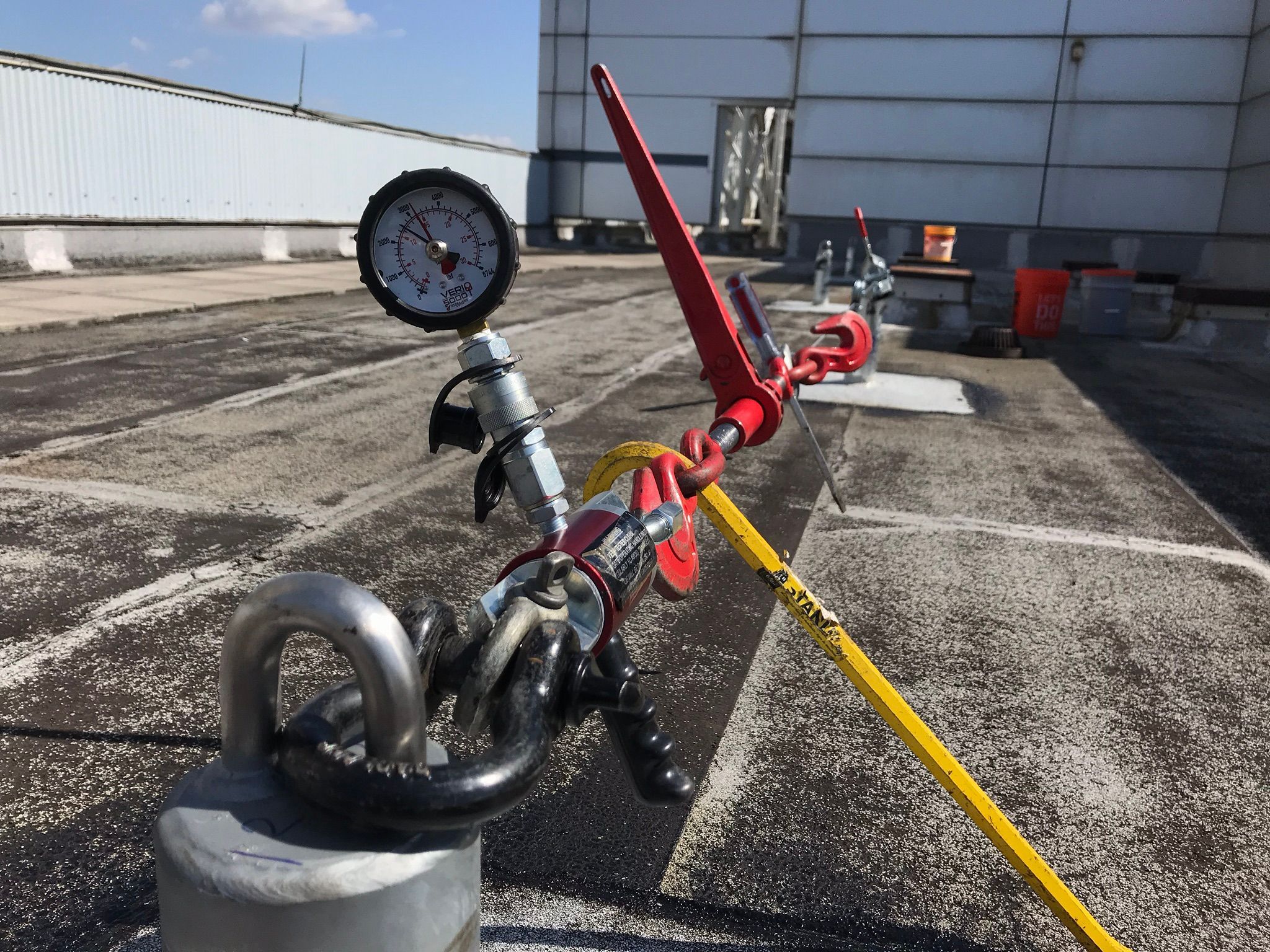
Depending on the system and circumstances, testing may be part of determining whether the anchorage remains suitable.
The important point is that recertification is an evaluation process, not simply placing a new tag on an old anchor.
When Might Roof Anchors Need Replacement?
There are situations where repairing or replacing an existing anchor system may make more sense.
Examples can include:
Significant corrosion
Long-term exposure to moisture, chemicals or harsh rooftop environments can deteriorate components.
Structural modifications
Changes to the building or roof assembly may affect how an existing anchor transfers loads into the structure.
Damaged components
Bent, cracked, loose or otherwise damaged components require evaluation before use.
Incompatible roof modifications
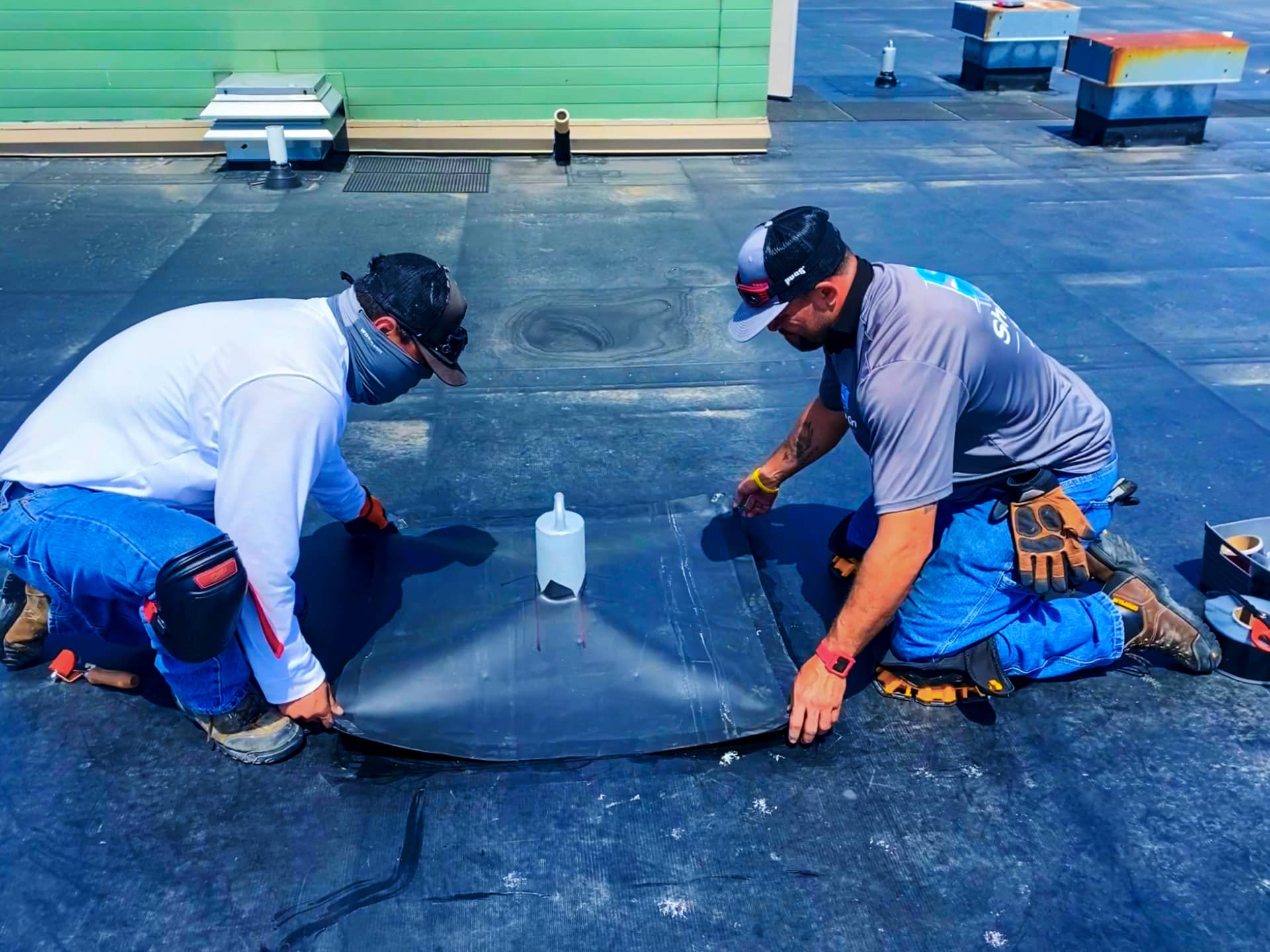
Reroofing, insulation changes, new membranes or equipment installations can alter the environment around an anchor.
Poor original placement
Even an adequately installed anchor may no longer support the building’s maintenance needs if contractors cannot safely reach required work areas.
Lack of verifiable information
Sometimes the biggest problem isn’t visible damage—it is the inability to establish what an anchor is, how it was installed or what it was designed to do.
In those cases, additional investigation or engineering may be needed before a decision can be made.
The Roof Itself May Have Changed
This is one of the most overlooked issues with older anchor systems.
Commercial roofs evolve.
A building may receive:
- New HVAC equipment
- Solar arrays
- Communications equipment
- New roofing membranes
- Additional insulation
- Skylights
- Mechanical screens
- Exhaust systems
- Structural modifications
Those changes can affect worker travel paths and access to roof edges.
An anchor layout designed years ago may no longer correspond with the way contractors need to use the roof today.
Therefore, evaluating existing anchors should include both the condition of the hardware and the current fall-protection needs of the building.
Repairing vs. Replacing a Roof Anchor System
Replacement should not automatically be the first recommendation.
A good assessment asks:
What is wrong with the existing system?
If the issue is limited to documentation, the solution may be different from a system with physical deterioration.
If only several anchors are problematic, selective corrective work may be possible.
If the entire layout no longer provides useful coverage, a redesigned system may offer a better long-term solution.
Depending on the facility, that solution might involve:
- New roof anchors
- Horizontal lifelines
- Guardrail
- Ladder fall protection
- Davit systems
- Rope-access anchors
- Walkway systems
- Custom engineered fall protection
The goal is not to preserve old equipment at all costs or replace equipment unnecessarily.
The goal is to create a documented, usable fall-protection system appropriate for the work being performed.
Why This Matters Before Exterior Work Begins
Anchor problems are often discovered at the worst possible time.
A contractor arrives for facade work, roof repairs or other elevated maintenance and requests documentation for the anchorage system.
The building cannot produce it.
Now the project may stop while the system is investigated.
Facility managers can avoid much of that disruption by evaluating existing anchor systems before scheduled rooftop or facade projects.
Frequently Asked Questions:
Can an old roof anchor still be usable?
Age alone does not determine whether an anchor is suitable for use. Its condition, installation, structural attachment, documentation and intended application all need to be considered.
Can you certify anchors when the original drawings are missing?
Missing documentation does not necessarily end the process, but additional investigation or engineering may be necessary to establish the system’s suitability.
What happens if only some anchors fail inspection?
Corrective action depends on the system. Individual anchors may potentially be repaired or replaced, while broader problems may justify redesigning portions of the fall-protection system.
Does recertification mean the anchor automatically passes?
No. An evaluation may identify deficiencies requiring repair, further engineering, testing or replacement.
Should roof anchors be replaced during reroofing?
Not automatically. However, reroofing is an excellent time to evaluate existing anchors because roof-system changes can affect anchorage components, flashing, accessibility and system layout.
Not Sure Whether Your Existing Roof Anchors Can Still Be Used?
Shine On Anchors can evaluate existing commercial roof-anchor systems, review available documentation and help determine the appropriate next step.
Contact Shine On Anchors 📞(773) 227-4522 | 📧anchors@shineongroup.com to schedule a commercial roof-anchor inspection or certification assessment.