
Cleaning Hard-to-Reach Windows Is More Complicated Than Most People Realize
When people see spotless windows on a multi-story office building, university, hospital, or commercial property, they rarely think about what it takes to clean them safely.
Unlike ground-level windows, hard-to-reach exterior glass often requires specialized access equipment, certified roof anchor systems, trained technicians, and detailed safety procedures.
For commercial buildings, cleaning hard-to-reach windows is not simply a maintenance task—it is a safety operation that requires planning, documentation, and proper fall protection.
Why Hard-to-Reach Windows Require Specialized Access
Many commercial buildings have windows located:
- Several stories above ground
- Over architectural setbacks
- Above glass canopies
- Behind parapet walls
- Along curved facades
- Above pedestrian walkways
Traditional ladders are often not practical or safe for these situations.
Instead, professional window cleaning companies use engineered access systems designed specifically for elevated work.
Common Methods Used to Clean Hard-to-Reach Windows
Rope Descent Systems (RDS)
Rope Descent Systems are one of the most common methods used on high-rise buildings.
Technicians descend the building using specialized ropes connected to certified roof anchors.
Benefits include:
- Minimal disruption to building occupants
- Access to difficult facades
- Efficient cleaning on tall structures
- Lower equipment footprint
Rope access systems require trained technicians, rescue procedures, and properly certified anchor points.
Suspended Platforms
Suspended platforms (swing stages) are frequently used on larger commercial properties.
These systems allow multiple technicians to work from a powered platform suspended from the roof.
Advantages include:
- Large production areas
- Efficient cleaning of repetitive facades
- Suitable for extensive glass surfaces
These systems require significant planning, inspections, and fall protection measures.
Water-Fed Pole Systems
For lower commercial buildings, water-fed poles can sometimes reach windows from the ground.
These systems use purified water and specialized brushes to clean glass without ladders.
Benefits include:
- Reduced fall exposure
- Faster setup
- Minimal building disruption
However, reach limitations often prevent their use on taller structures.
Aerial Lifts
Boom lifts and scissor lifts may be used when site conditions allow.
These systems provide elevated access for:
- Mid-rise buildings
- Atriums
- Courtyards
- Architectural features
Lift usage requires trained operators and proper site safety controls.
The Role of Roof Anchors
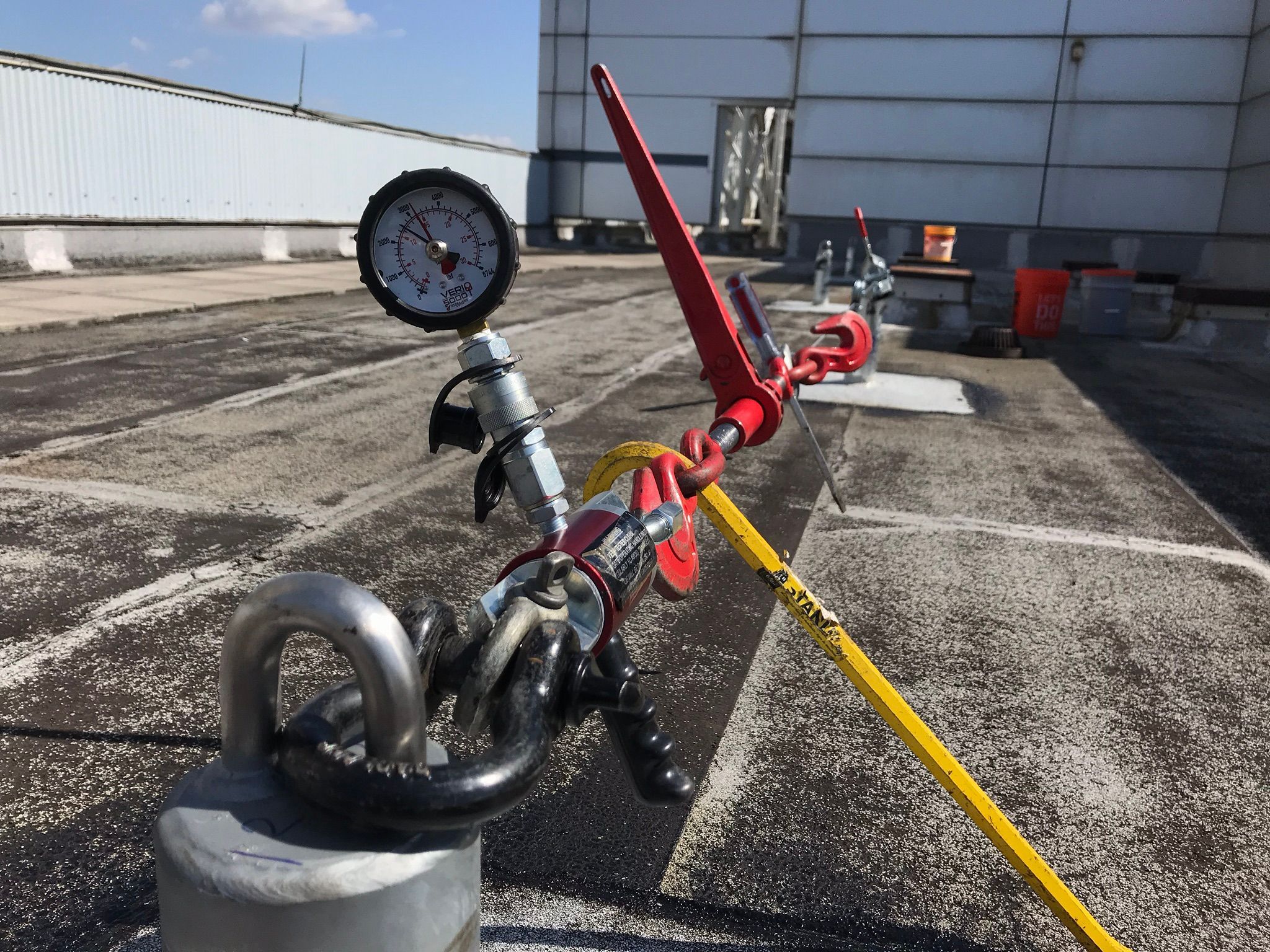
Roof anchors are one of the most important components of high-rise window cleaning.
Anchors provide secure attachment points for:
- Rope descent systems
- Fall arrest systems
- Rescue equipment
- Work positioning systems
Without certified roof anchors, many commercial window cleaning operations cannot be performed safely.
Property managers should regularly verify:
✔ Inspection records
✔ Certification dates
✔ Anchor identification tags
✔ Structural integrity
✔ Documentation availability
Why Building Owners Should Care About Window Cleaning Safety
Most property owners focus on the final result: clean glass.
However, the greater risk often lies in the access method.
A contractor working on your building should have:
- OSHA-compliant procedures
- Fall protection systems
- Rescue planning
- Insurance coverage
- Trained personnel
- Documented safety programs
The safest contractor is rarely the lowest bidder.
Questions to Ask Before Hiring a Window Cleaning Contractor
Before hiring a company to clean hard-to-reach windows, ask:
How will technicians access the building?
Do you use certified roof anchors?
Do you have a written rescue plan?
Are technicians trained in rope access or suspended access systems?
Can you provide proof of insurance?
Have you worked on buildings similar to ours?
The answers can reveal a great deal about a contractor’s experience and professionalism.
Hard-to-Reach Window Cleaning Checklist
Before scheduling service:
Building Access
- Roof access available
- Anchor locations identified
- Work zones accessible
Safety Documentation
- Insurance verified
- Rescue plan available
- OSHA procedures documented
Roof Anchor Systems
- Certifications current
- Inspection records available
- Tags visible
- No visible damage
Frequently Asked Questions:
Can hard-to-reach windows be cleaned without roof anchors?
In some situations, yes. Water-fed poles or aerial lifts may be used. However, many high-rise buildings require certified roof anchor systems for safe access.
Are rope access systems safe?
When performed by trained technicians using certified equipment and rescue procedures, rope access is one of the safest and most efficient methods for accessing difficult building facades.
How often should commercial windows be cleaned?
Frequency depends on building location, tenant expectations, and environmental conditions. Many commercial properties schedule services quarterly, semi-annually, or annually.
What happens if roof anchor certifications are missing?
Window cleaning operations may be delayed until anchors can be inspected and certified.
Safe Access Is Just as Important as Clean Glass
Cleaning hard-to-reach windows is about more than appearance.
The process depends on safe access systems, certified roof anchors, trained technicians, and documented procedures that protect workers and building owners alike.
At Shine On Anchors, we help commercial properties maintain safe rooftop access through roof anchor inspections, certifications, fall protection consulting, and support for window cleaning operations.
Contact our team today to discuss your building’s roof anchor and fall protection needs.
Contact Shine On Anchors: 📞(773) 227-4522 | 📧anchors@shineongroup.com