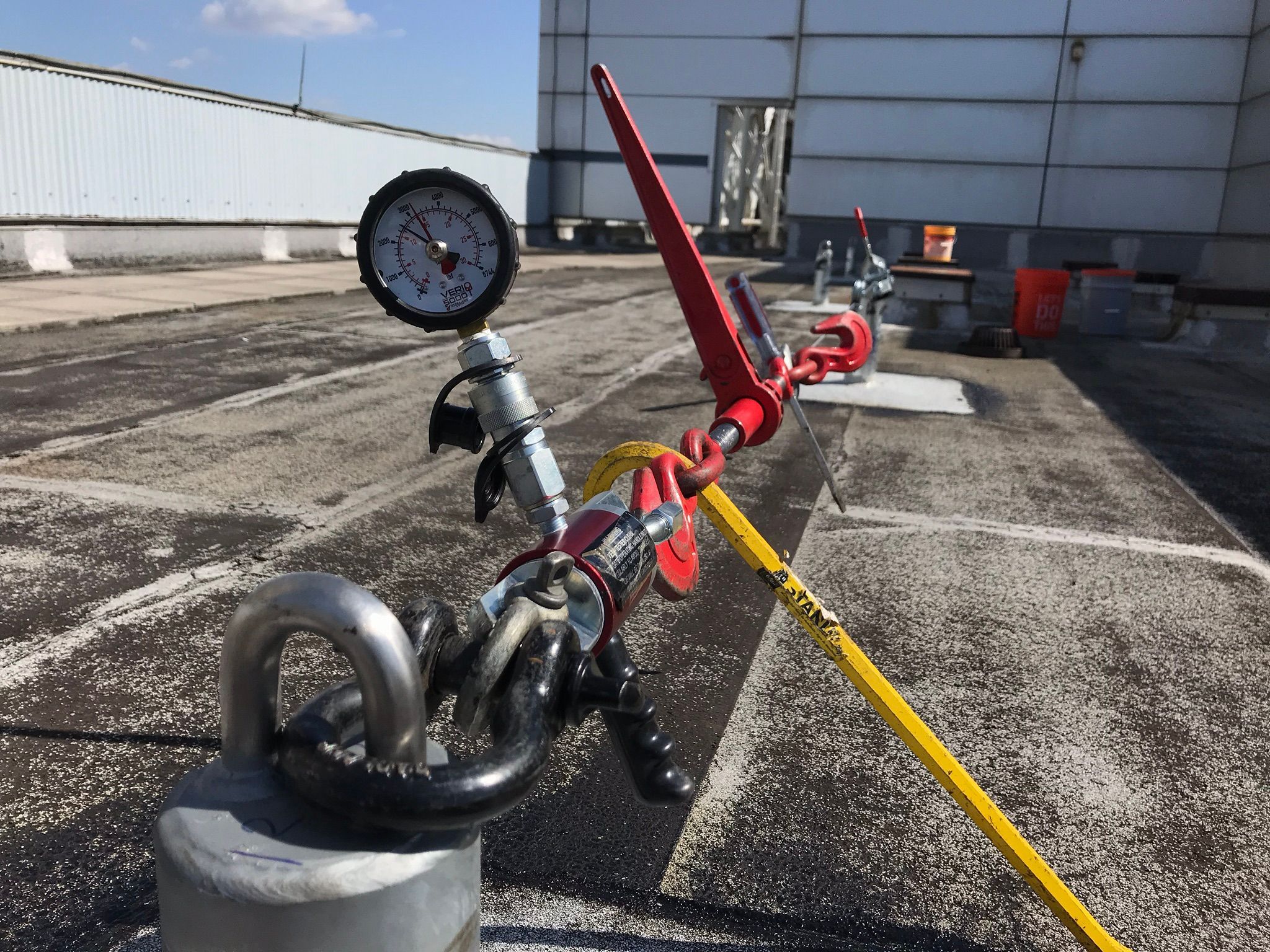
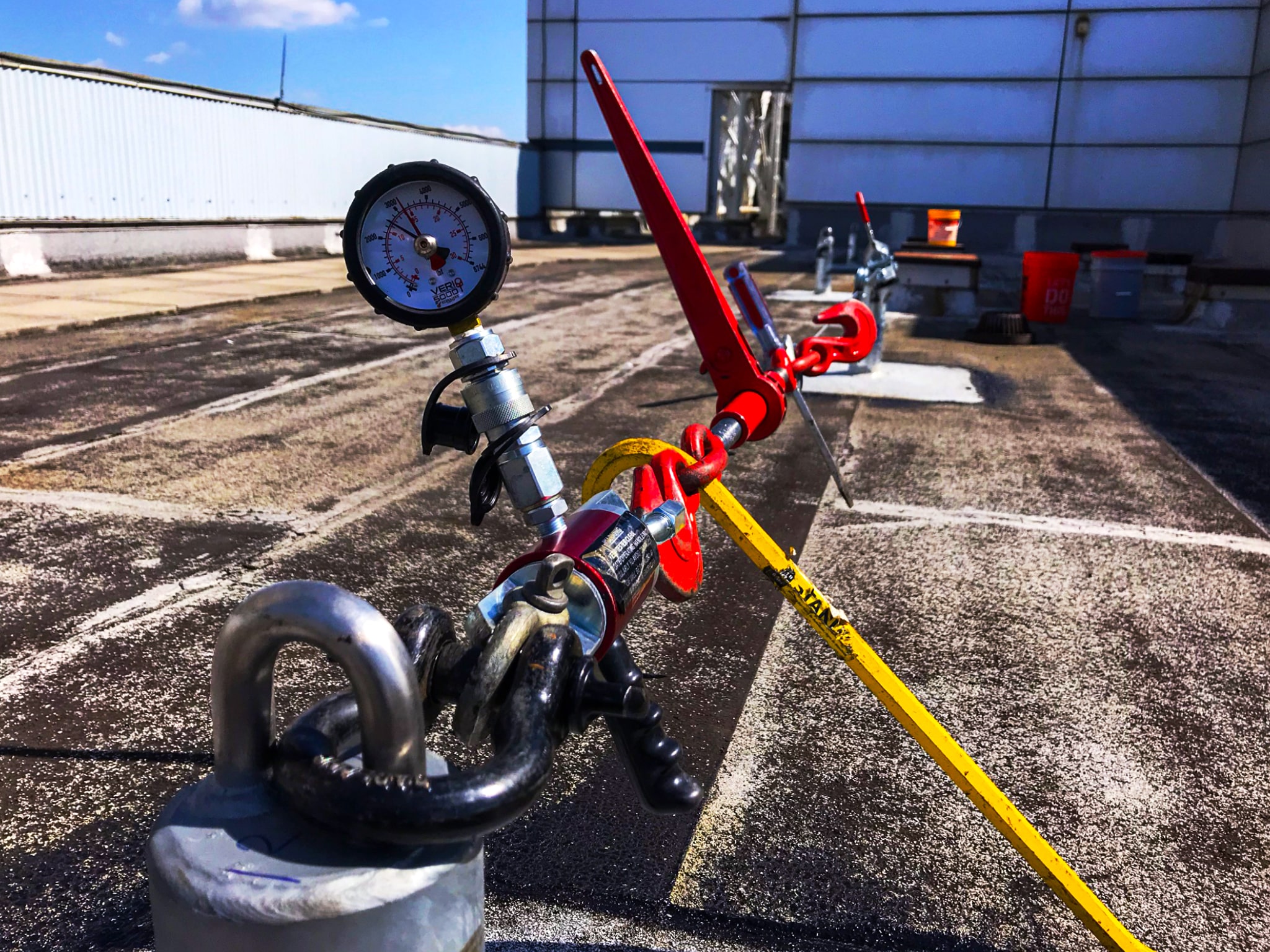
Roof anchor testing helps building owners verify that fall protection anchorage systems are ready for use and meet the requirements of the system, manufacturer, engineer, and applicable safety standards. But not every type of anchor test is the same. Two terms that are often confused are proof load testing and pull testing.
Proof load testing applies a specified test load to an installed anchor to help verify its performance without intentionally testing the anchor to failure. A pull test may refer to several different testing procedures depending on the anchor, substrate, system design, and testing objective. Understanding that difference matters when building owners, facility managers, contractors, and engineers are determining how an existing roof anchor system should be inspected, tested, documented, or certified.
For commercial buildings, anchor testing is only one part of a complete fall protection program. The condition of the anchor, its installation, supporting structure, documentation, previous test records, intended use, and applicable OSHA requirements all need to be considered before an anchorage system is placed into service.
Shine On Anchors provides commercial roof anchor inspection, load testing, certification, and fall protection services for facilities throughout the United States.
What Is the Difference Between Proof Load Testing and Pull Testing?
Anchor point testing is the cornerstone of OSHA and ANSI compliance, yet many building owners don’t know the difference between a proof load test and a pull test. Let’s clear that up.
What Is a Proof Load Test?
A proof load test applies a specific static load (typically 1.25x to 2x the rated strength) to verify the anchor’s structural integrity without damaging it.
What Is a Pull Test?
A pull test checks the mechanical strength and adhesion of the anchor installation — often used during new installations or when verifying chemical or mechanical anchors in concrete.
How Often Should Anchors Be Tested?
-
- Annually: Visual inspection for corrosion, cracks, or loosened hardware.
- Every 5–10 years: Proof load testing per OSHA 1910.27 and ANSI Z359.18.
Frequently Asked Questions:
Who can perform proof load testing?
Only qualified technicians with calibrated testing equipment, such as Shine On Anchors’ certified team.
Will testing damage my anchors?
When done correctly, proof load tests are non-destructive and confirm safe working loads.
🧩 Stay OSHA-Compliant with Expert Anchor Testing.
Book Your Anchor Load Test Today at (773) 227-4522 or email anchors@shineongroup.com