
When employees work at height, understanding who is authorized to perform a task, who can recognize and correct hazards, and who has the expertise to evaluate fall protection systems is essential.
OSHA uses terms such as authorized, competent, and qualified in its workplace safety regulations. These terms describe different responsibilities and capabilities, but they should not be treated as three universal certification levels that every employee must progress through.
For commercial building owners, facility managers, contractors, and safety professionals, understanding these distinctions can help ensure the right people are involved in rooftop access, fall protection planning, inspections, and system evaluations.
What Is an Authorized Person Under OSHA?
Under OSHA 1910.21, authorized describes an employee assigned by the employer to perform a specific duty or allowed to enter a particular workplace area.
Being authorized to perform a task does not automatically establish that the employee has all the qualifications needed to inspect, engineer, or approve a fall protection system.
Employers must ensure workers have the training, equipment, and protection required for their assigned work.
What Is an OSHA Competent Person?
Under OSHA 1910.140, a competent person is capable of identifying existing and predictable hazards involving personal fall protection systems and their use, and has authorization to take prompt corrective action.
A competent person combines knowledge of hazards with the authority to address identified problems.
Depending on the work and applicable requirements, competent-person responsibilities may involve evaluating workplace conditions, identifying unsafe equipment, or coordinating corrective actions.
A job title alone does not establish competent-person status.
What Is an OSHA Qualified Person?
OSHA describes a qualified person as someone who has demonstrated the ability to resolve problems relating to a particular subject, work activity, or project through appropriate credentials or extensive knowledge, training, and experience.
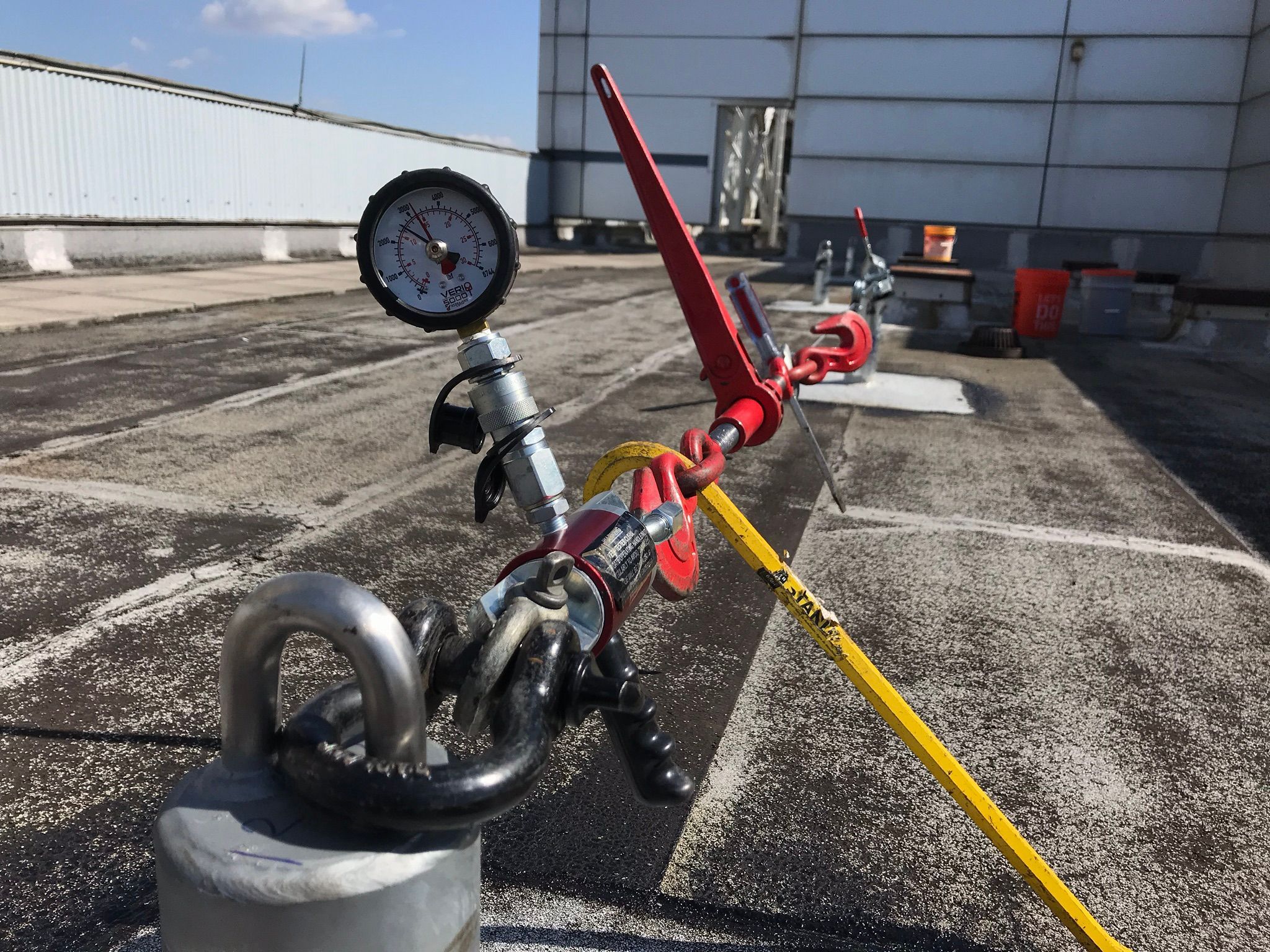
Qualified persons may be involved in technical work such as fall protection system design, engineering evaluations, and specific anchorage inspections or certifications where the regulation requires that level of expertise.
The applicable OSHA provision determines when a qualified person is required.
Competent Person vs. Qualified Person: What’s the Difference?
The main difference involves their respective functions.
A competent person can identify applicable hazards and has authority to take prompt corrective action.
A qualified person has demonstrated technical expertise to address problems associated with the specific work or system.
A person may satisfy both descriptions, but the terms are not interchangeable in every regulatory context.
For example, OSHA 1910.27 specifically requires a qualified person to perform annual inspections and periodic certifications of applicable rope descent system anchorages.
What Do These Roles Mean for Commercial Building Owners?
Building owners and property managers often coordinate rooftop work performed by multiple contractors.
Before maintenance begins, they should understand:
- Who is responsible for the employees performing the work.
- What training and protective equipment those employees require.
- Who will evaluate the available anchorage systems.
- Whether the applicable inspections or certifications require a qualified person.
- Who can identify and correct hazards.
- What documentation contractors need before using permanent building systems.
These questions become especially important when rooftop operations involve rope descent systems, roof anchors, horizontal lifelines, and suspended-access equipment.
Why Qualified Anchorage Evaluation Matters
A permanent roof anchor can appear intact while important questions remain about its installation, supporting structure, intended use, or documentation.
Depending on the system and applicable requirements, a qualified evaluation may involve reviewing engineering drawings, inspecting the equipment, considering previous tests, or identifying additional work.
Workers should not assume an anchorage is suitable simply because it is installed on a roof.
Frequently Asked Questions:
Are authorized, competent and qualified persons three OSHA certification levels?
No. OSHA uses these terms to describe different responsibilities and capabilities. They are not a universal three-level certification program.
Can one person be both competent and qualified?
Yes, if the person satisfies the relevant criteria for both roles.
Who can certify rope descent system anchorages?
OSHA 1910.27 requires covered rope descent system anchorages to be certified by a qualified person.
Need Help Evaluating Commercial Roof Anchors?
Shine On Anchors helps commercial building owners nationwide with roof anchor inspections, certification, load testing, and fall protection systems.
Contact our team to discuss your existing anchorage equipment and project requirements.
Phone: (773) 227-4522
Email: anchors@shineongroup.com