
OSHA window cleaning regulations establish important safety requirements for employees performing work at height. For commercial building owners and property managers, these requirements are especially important when window cleaning contractors use rooftop anchorages, rope descent systems, and other elevated-access equipment.
The most relevant OSHA requirements depend on the method of access and the work being performed.
For many commercial window cleaning operations, important standards include OSHA 1910.27, 1910.28, 1910.29, 1910.30, and 1910.140.
Understanding these regulations helps property managers prepare their buildings for exterior maintenance and identify potential safety and documentation problems before contractors arrive.
OSHA 1910.27: Rope Descent System Requirements
OSHA 1910.27 contains specific requirements for rope descent systems used in general industry.
These systems allow trained workers to descend along the exterior of a building using specialized equipment and appropriate anchorage.
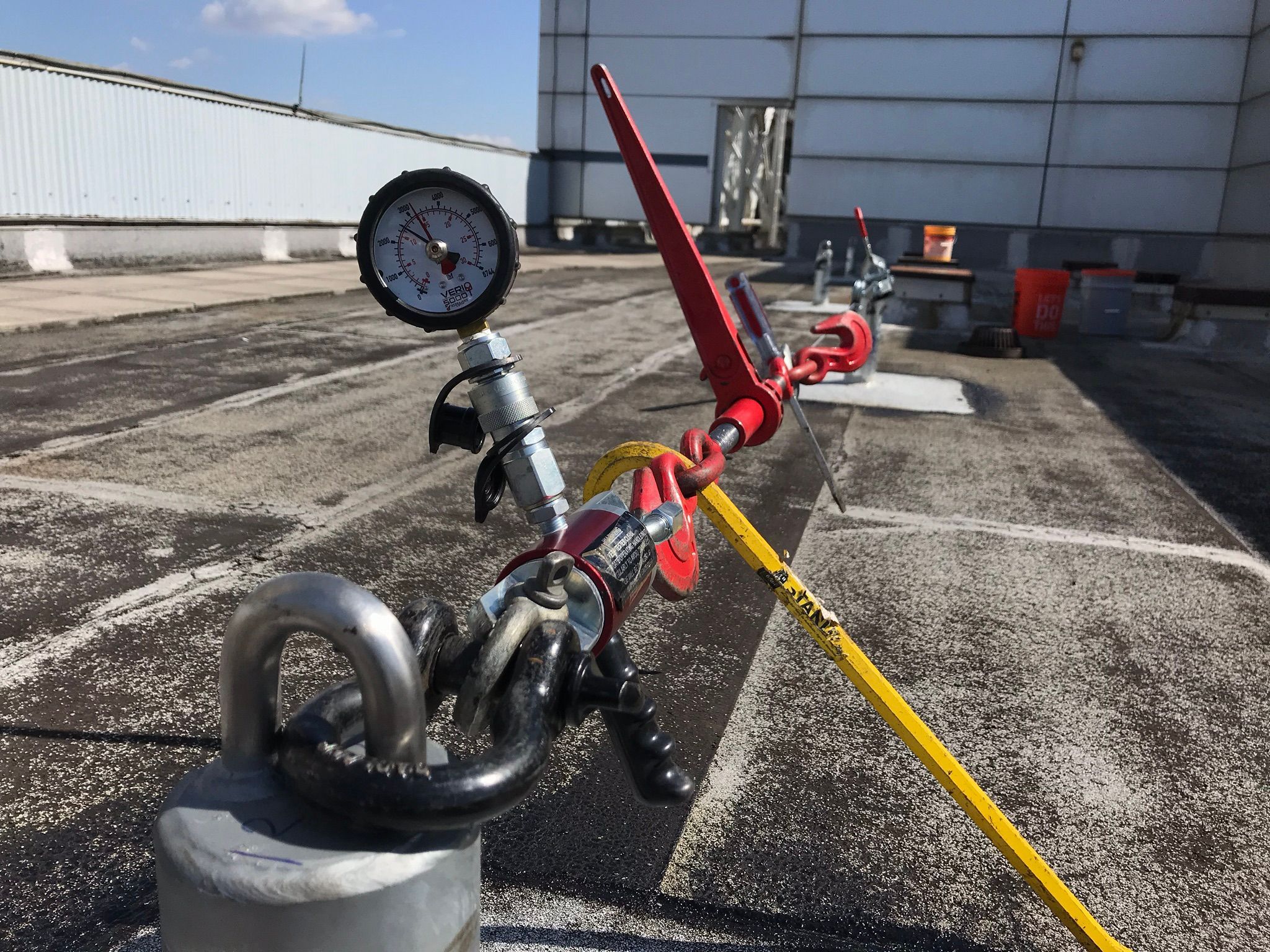
For covered rope descent systems, OSHA requires building owners to provide written information confirming that each applicable anchorage has been identified, tested, certified, and maintained to support at least 5,000 pounds in any direction for each employee attached.
This information must be based on annual inspection by a qualified person and certification by a qualified person as necessary and at least every 10 years.
The employer must obtain the required written anchorage information before allowing workers to use the anchorages.
The OSHA 300-Foot Rope Descent Limit
OSHA 1910.27 generally prohibits the use of rope descent systems at heights greater than 300 feet above grade.
An exception may apply when the employer demonstrates that other means of access are not feasible or create a greater hazard.
This restriction should be considered when planning work on taller commercial buildings.
The appropriate access method depends on the building, the work being performed, and the applicable requirements.
OSHA Fall Protection Requirements for Window Cleaning
OSHA 1910.28 establishes duties to provide fall protection for general industry employees exposed to covered fall hazards.
Depending on the operation, applicable protective systems may include:
- Personal fall arrest systems.
- Guardrail systems.
- Travel restraint systems.
- Other permitted fall protection methods.
Employees using covered rope descent systems must also have a separate, independent personal fall arrest system that meets applicable OSHA requirements.
Employers are responsible for providing appropriate protective equipment, training, and safe working procedures.
Roof Anchor Inspection and Certification
Permanent roof anchor systems are critical components of many commercial window cleaning operations.
Before a rope descent system is used, the building owner and employer must address the anchorage requirements established by OSHA 1910.27.
Building managers should maintain available records including:
- Roof anchor drawings.
- Anchorage identification and location information.
- Annual inspection reports.
- Certification documentation.
- Testing records, where applicable.
- Engineering evaluations.
- Maintenance and repair history.
Not every anchor evaluation requires the same testing procedure.
The appropriate testing and certification scope depends on the system, available documentation, applicable standards, and engineering or manufacturer requirements.
What About Worker Training?
OSHA 1910.30 contains training requirements relevant to workers exposed to certain fall hazards and employees using rope descent systems.
Employers must ensure that affected workers receive the applicable training and understand how to use their fall protection and access equipment safely.
Training does not replace the need for suitable anchorages, equipment inspections, or safe work planning.
What Building Owners Should Do Before Window Cleaning Begins
Property managers can help prepare for commercial window cleaning by reviewing several important items:
- Identify the access method
Determine whether the contractor will use rope descent systems, powered platforms, lifts, or another method.
- Review anchorage documentation
Locate available inspection, testing, certification, and engineering records for permanent building systems.
- Identify rooftop hazards
Review roof edges, openings, access points, electrical equipment, and other potential hazards.
- Coordinate with contractors
Make relevant building information available before the project begins.
- Address deficiencies early
If anchors are damaged, undocumented, or unsuitable for the intended work, arrange an appropriate evaluation before contractors rely on them.
Frequently Asked Questions:
Which OSHA regulation covers high-rise window cleaning?
Several OSHA standards may apply. OSHA 1910.27 establishes requirements for rope descent systems, while other regulations address fall protection, training, equipment, and access methods.
Do all window cleaning projects require rope descent systems?
No. Depending on the building and work involved, contractors may use ladders, lifts, suspended platforms, rope descent systems, or other suitable access methods.
How often must rope descent system anchorages be certified?
Under OSHA 1910.27, applicable anchorages must be certified by a qualified person as necessary and at least every 10 years, with annual inspections by a qualified person.
Is Your Building Ready for Its Next Window Cleaning Project?
Shine On Anchors helps commercial building owners nationwide with roof anchor inspections, certification, load testing, and fall protection systems.
Before your next window cleaning or façade maintenance project, contact our team to discuss your building’s existing anchorage and access systems.
Phone: (773) 227-4522
Email: anchors@shineongroup.com